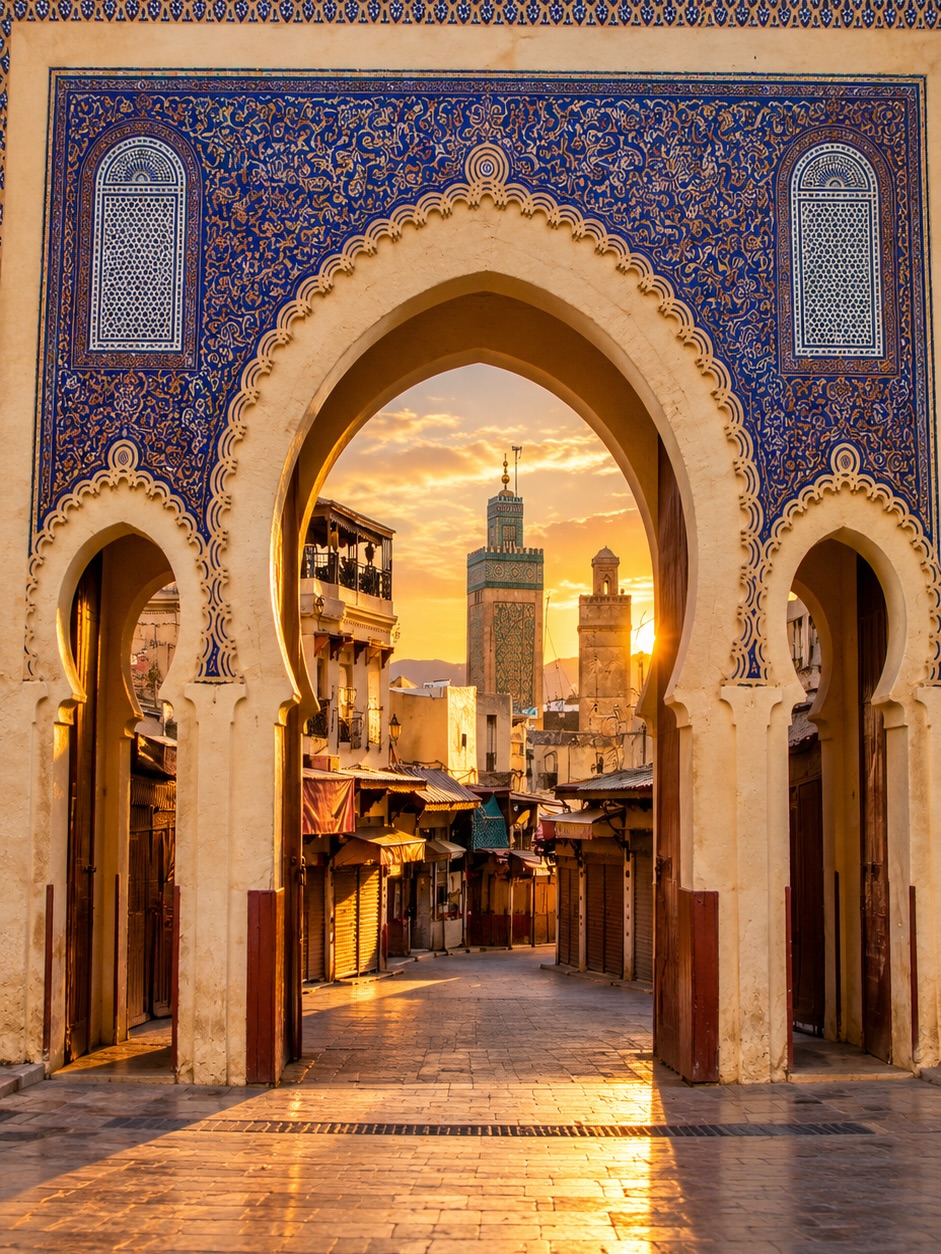
Discover the Legacy of Morocco
Morocco:
A Journey Through Time
From ancient civilizations to magnificent imperial dynasties,
explore the extraordinary history that shaped Morocco's identity,
architecture and cultural heritage.
A Land of Many Civilizations
A History Written in Stone and Time
Morocco's story stretches across millennia. Its position between
Africa, Europe and the Mediterranean made it a meeting place
for peoples, ideas, trade and civilizations.
Amazigh communities form a fundamental part of the country's
historical foundations. Phoenician, Carthaginian, Roman, Arab
and Andalusian influences also contributed to Morocco's rich heritage.
Successive dynasties founded cities, built monumental architecture,
encouraged scholarship and connected Morocco to the wider world.
"Every medina, monument and ancient road tells a story of a kingdom shaped by time."
The Great Chapters
Through the Ages of Morocco
Explore the major periods that shaped Moroccan history, from ancient civilizations to the modern kingdom.
Antiquity
Ancient Morocco
Amazigh societies shaped the region's early history. Phoenician and Carthaginian traders reached its coasts, followed by the Kingdom of Mauretania and Roman rule in parts of northern Morocco.
Ancient Civilizations
789
The Idrisid Dynasty
Idris I established a state in the region. His successors helped develop Fez into an important centre of political, religious and intellectual life.
The Foundations of a State
11th–12th Century
The Almoravids
The Almoravids built a powerful empire and made Marrakech a major political centre, connecting territories across North Africa and Al-Andalus.
The Rise of Marrakech
12th–13th Century
The Almohads
The Almohad dynasty expanded across much of the Maghreb and Al-Andalus, leaving a remarkable architectural legacy in cities such as Marrakech and Rabat.
Monumental Architecture
13th–15th Century
The Marinids
The Marinids strengthened Fez as a centre of learning and architecture. Their era is associated with madrasas, refined decoration and urban development.
Knowledge and Art
16th–17th Century
The Saadians
The Saadians made Marrakech a prominent royal capital. Their legacy includes the celebrated Saadian Tombs and the decorative arts of their period.
Royal Grandeur
From the 17th Century
The Alaouite Dynasty
The Alaouite dynasty consolidated its rule and shaped Morocco's modern historical trajectory. Under Sultan Moulay Ismail, Meknes became a grand imperial capital.
An Enduring Dynasty
1956–Today
Modern Morocco
Morocco regained independence in 1956 after the protectorate period and continued to develop as a modern kingdom while preserving its historic institutions and cultural heritage.
Independence and Renewal
Capitals of History
The Four Imperial Cities
Discover the royal cities that preserve Morocco's historic medinas, monuments, palaces and traditions.
 01
Founded in the 11th century
Marrakech
Founded under the Almoravids, Marrakech became one of Morocco's most influential royal capitals, known for its medina, palaces and monumental architecture.
 02
Founded in the late 8th century
Fez
A centre of scholarship, craftsmanship and religious learning, Fez is celebrated for its ancient medina, traditional schools and urban heritage.
 03
Royal capital under Moulay Ismail
Meknes
Transformed into a grand capital in the 17th century, Meknes is known for its monumental gates, historic walls and royal architectural heritage.
 04
Capital of modern Morocco
Rabat
From Almohad monuments to modern institutions, Rabat reflects several periods of Moroccan history and serves as the country's contemporary capital.
A Living Legacy
History That Lives On
Morocco's past is not confined to museums and monuments. It lives in the rhythm of its medinas, the work of its artisans, its scholarly traditions and the diversity of its communities.
Exploring this heritage reveals a country shaped by continuity, exchange and creativity across generations.
- Ancient medinas and historic monuments
- Traditional architecture and decorative arts
- Libraries, scholarship and centres of learning
- Amazigh, Arab, Andalusian and African influences
Your Journey Begins Here
Discover the Past.
Experience Morocco.
Walk through ancient streets, explore imperial landmarks and discover the stories that make Morocco an extraordinary destination for history lovers.
Explore Morocco's Destinations