
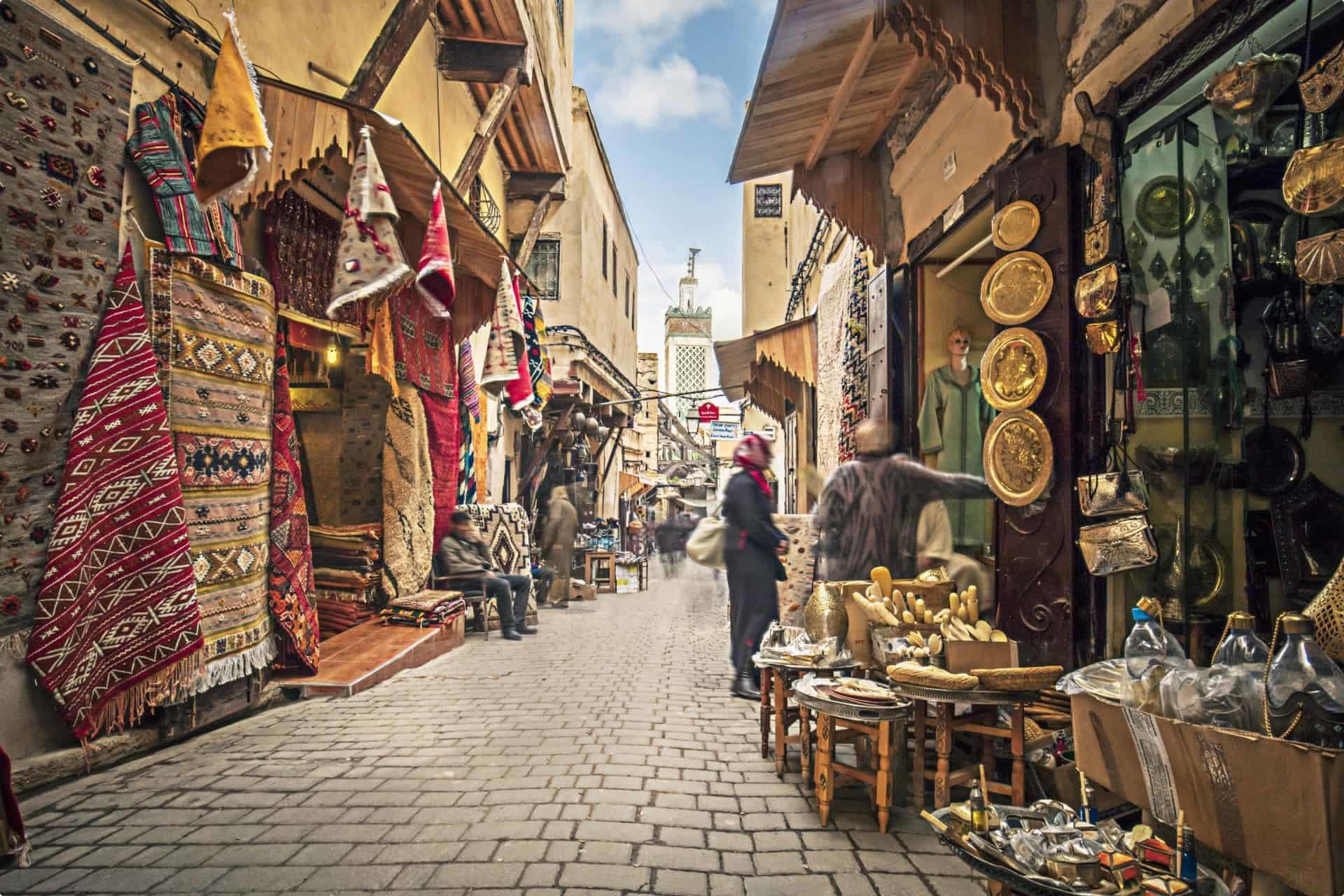
Morocco is a country where history comes alive in ancient cities, magnificent palaces, historic mosques, and traditional villages. Located at the crossroads of Africa, Europe, and the Arab world, Morocco has developed a rich cultural identity shaped by centuries of migration, trade, scholarship, and cultural exchange.
From the ancient Amazigh communities of North Africa to the great Islamic dynasties and the modern Moroccan state, the country’s history tells a fascinating story of resilience, creativity, and continuity.
For travelers, discovering Morocco’s history is more than visiting monuments. It is an opportunity to understand the traditions, architecture, and cultural influences that make the country unique.
1. Ancient Morocco: The Roots of a Civilization
The history of Morocco stretches back thousands of years. Long before the arrival of Islam, the region was home to Amazigh communities, also known historically as Berbers. These Indigenous peoples of North Africa developed their own languages, traditions, social structures, and ways of life.
Amazigh communities inhabited mountains, plains, oases, and coastal regions, establishing agricultural settlements and participating in trade across North Africa and the Mediterranean.
Morocco’s strategic location attracted traders and settlers from other parts of the ancient world. Phoenicians established trading connections along the Mediterranean coast, while Carthaginian influence later expanded across parts of the region.
From the second century BCE, Roman power extended into northern Morocco. The Roman province of Mauretania Tingitana included settlements such as Volubilis, which became an important administrative and commercial center.
Today, the archaeological remains of Volubilis, near Meknes, offer visitors a remarkable glimpse into ancient urban life. Its mosaics, public buildings, and monumental arches reveal the region’s connections with the wider Roman world.
Despite these external influences, Amazigh societies remained a fundamental part of Morocco’s population and cultural heritage.
2. The Arrival of Islam and the Rise of the Idrisid Dynasty
During the late seventh and eighth centuries, Islam spread into North Africa, gradually transforming the region’s religious, political, and cultural landscape.
One of the most important turning points in Moroccan history came with the arrival of Idris I, a descendant of the Prophet Muhammad ﷺ, who settled in the region in the late eighth century.
In 788 CE, Idris I established a political base among local Amazigh communities. His son, Idris II, consolidated the dynasty’s authority and played a major role in developing Fez as an important political, religious, and cultural center.
The Idrisid dynasty is widely associated with the beginnings of an independent Islamic state in Morocco. Its legacy contributed to the development of Moroccan statehood and the growth of Fez as a major center of learning and religious life.
The city gradually attracted scholars, merchants, and families from different parts of the Islamic world, strengthening its cultural and intellectual importance.
3. Fez: A Historic Center of Knowledge and Culture
Founded in the late eighth century and developed significantly under the Idrisids, Fez became one of Morocco’s most influential historic cities.
Its ancient medina, known as Fes el-Bali, preserves a remarkable network of narrow streets, traditional houses, workshops, mosques, and historic educational institutions.
The Qarawiyyin Mosque and educational complex, founded in the ninth century and expanded over time, became an important center of religious scholarship and learning.
For centuries, Fez attracted students and scholars from across North Africa and beyond. Its traditions of education, craftsmanship, and religious study remain central to its identity.
Today, visitors can explore the medina’s traditional markets, historic architecture, and workshops producing leather goods, ceramics, textiles, and metalwork.
Fez demonstrates how Morocco’s historical heritage continues to shape everyday life.
4. The Great Moroccan Dynasties
Over the centuries, several dynasties expanded their political influence and left lasting marks on Morocco’s cities, architecture, and institutions.
The Almoravid Dynasty
The Almoravids emerged from Saharan Amazigh communities in the eleventh century. They established a powerful state that connected large parts of Morocco with territories in present-day Algeria and the Iberian Peninsula.
They founded Marrakech around 1070, turning it into a major political and commercial center. Their rule helped strengthen connections between the Sahara, North Africa, and al-Andalus, the Muslim-ruled parts of the Iberian Peninsula.
The Almohad Dynasty
The Almohads rose to power in the twelfth century, replacing the Almoravids and building an extensive empire across North Africa and parts of the Iberian Peninsula.
Their period is remembered for important architectural achievements, including monumental gates, mosques, and fortified structures.
The Hassan Tower in Rabat, begun during the Almohad period, remains one of Morocco’s most recognizable historical monuments. Although the intended mosque was never completed, its remains reveal the ambition of the original project.
The Marinid Dynasty
The Marinids ruled much of Morocco from the thirteenth to the fifteenth centuries. They strengthened Fez and supported the construction of religious schools known as madrasas.
Many Marinid-era monuments are admired for their intricate geometric patterns, carved plaster, decorative woodwork, and traditional tilework.
Their architectural legacy remains especially visible in Fez and other historic cities.
The Saadian Dynasty
The Saadians rose to prominence in the sixteenth century and made Marrakech an important royal capital.
One of the best-known monuments associated with their rule is the Saadian Tombs in Marrakech, celebrated for their decorative craftsmanship and elaborate architectural details.
The Saadian period also saw Morocco strengthen its position in regional trade and political affairs.
The Alaouite Dynasty
The Alaouite dynasty emerged in the seventeenth century and continues to rule Morocco today.
Under successive Alaouite sultans and kings, Morocco developed its political institutions, royal cities, and diplomatic relationships. Important historic sites associated with this era can be found in Meknes, Rabat, and other parts of the country.
Meknes, in particular, became a major imperial city under Sultan Moulay Ismail in the late seventeenth and early eighteenth centuries, known for its monumental gates, royal complexes, and defensive walls.
5. Morocco and Its Connections with Andalusia
Morocco has maintained deep historical connections with al-Andalus, the region of the Iberian Peninsula that experienced centuries of Muslim rule.
These connections developed through trade, scholarship, migration, diplomacy, and shared artistic traditions. Scholars, artisans, merchants, and families moved between the two shores of the Strait of Gibraltar, carrying knowledge and cultural influences with them.
Following the gradual expansion of Christian kingdoms in the Iberian Peninsula, many Muslims and Jews migrated to North Africa, including Morocco. Their arrival contributed to the development of cities such as Fez, Tetouan, and Chefchaouen.
Andalusian influences can still be seen in Moroccan music, gardens, architecture, decorative arts, and aspects of traditional cuisine.
In northern Morocco, especially in Tetouan, the historic medina reflects a distinctive combination of local traditions and Andalusian heritage.
For travelers interested in cultural history, these cities offer a fascinating way to explore the connections between Morocco and southern Europe.
6. Morocco as a Crossroads of Trade and Culture
Throughout its history, Morocco has benefited from its strategic position between the Atlantic Ocean, the Mediterranean Sea, and the trans-Saharan trade routes.
Caravans once carried gold, salt, textiles, and other valuable goods across the Sahara, connecting Moroccan cities with communities in West Africa. Coastal ports linked the country to Mediterranean and Atlantic trading networks.
These exchanges helped shape Morocco’s economy and brought together different languages, traditions, and artistic influences.
Historic cities such as Marrakech, Fez, Tangier, and Essaouira developed as important centers of commerce and cultural interaction.
Essaouira, known historically as Mogador, became an important Atlantic port, particularly during the eighteenth century. Its fortified medina reflects its role in maritime trade and international exchange.
Morocco’s cultural diversity is therefore not simply the result of geography. It is also the product of centuries of interaction between communities across continents.
7. The French and Spanish Protectorates
In 1912, Morocco became a French protectorate, while Spain controlled separate zones in the north and south. Tangier later had a distinct international status for much of the twentieth century.
Although the Moroccan monarchy continued to exist, colonial authorities exercised significant political and administrative power in their respective zones.
The protectorate period brought changes to infrastructure, urban development, education, and the economy. At the same time, resistance movements emerged in different parts of the country.
One of the most significant figures of the resistance was Abd el-Krim, who led a movement against Spanish colonial forces in the Rif region during the 1920s.
Nationalist organizations and activists later played an increasingly important role in demanding independence. Sultan Mohammed V became a central symbol of the national movement.
Morocco eventually regained its independence from France in 1956. Spain also ended its protectorate in northern Morocco that year, while the country’s southern territories experienced a more complex process of territorial change over subsequent decades.
Independence marked a decisive turning point in the development of the modern Moroccan state.
8. Morocco After Independence
Following independence in 1956, Morocco began building its modern political, economic, and administrative institutions.
King Mohammed V became an important symbol of national independence. After his death in 1961, his son Hassan II succeeded him and ruled until 1999.
During Hassan II’s reign, Morocco experienced significant political and economic changes, alongside periods of tension and repression that are now examined as part of the country’s contemporary history.
In 1999, King Mohammed VI ascended the throne. His reign has included infrastructure development, urban renewal, social initiatives, and constitutional reforms, including the adoption of a new constitution in 2011.
Modern Morocco continues to balance its historical traditions with the challenges and opportunities of contemporary society.
Its cities combine historic medinas and traditional craftsmanship with modern transport, universities, business districts, and growing tourism infrastructure.
9. Historic Places to Visit in Morocco
Travelers can discover Morocco’s history by visiting its monuments, archaeological sites, and UNESCO-listed historic areas.
Volubilis
Located near Meknes, Volubilis is an important archaeological site containing Roman-era remains, mosaics, and monumental structures. It offers insight into ancient urban life in North Africa.
The Medina of Fez
The historic medina of Fez is one of Morocco’s most remarkable cultural landscapes. Its traditional streets, historic institutions, and artisan workshops provide a vivid connection with the past.
The Medina of Marrakech
Marrakech’s historic center contains traditional souks, palaces, gardens, religious monuments, and the famous Jemaa el-Fnaa square.
The Historic City of Meknes
Meknes is known for its monumental gates, royal remains, historic walls, and connections with Sultan Moulay Ismail.
The Kasbah of the Udayas in Rabat
Overlooking the Atlantic coast and the Bou Regreg river, the Kasbah of the Udayas is a historic fortified district with distinctive architecture and beautiful views.
The Medina of Tetouan
Tetouan’s medina preserves a rich combination of Moroccan and Andalusian influences, making it particularly important for understanding the cultural history of northern Morocco.
Ait Ben Haddou
This historic earthen settlement in southern Morocco illustrates traditional architecture adapted to the region’s environment and trade routes. Its fortified structures and distinctive appearance have made it an important cultural landmark.
Visiting these places allows travelers to connect historical events with the landscapes, buildings, and traditions that survive today.
10. Why Morocco’s History Still Matters Today
Morocco’s history remains visible in everyday life. It can be found in the languages people speak, the food they prepare, the music they perform, and the architecture of their cities.
Amazigh heritage remains an essential part of the country’s identity. Arab and Islamic traditions have shaped its institutions, scholarship, and cultural practices, while Andalusian, African, Jewish, and Mediterranean connections have added further layers to its heritage.
Traditional craftsmanship continues in the medinas, where artisans preserve techniques passed down through generations. Religious festivals, local markets, family traditions, and regional music also reflect the country’s historical continuity.
Understanding this history helps visitors appreciate Morocco beyond its famous tourist attractions. It reveals a country shaped by exchange, adaptation, creativity, and a lasting sense of cultural identity.
Conclusion: Discover Morocco Through Its Past
Morocco’s history is a story of ancient civilizations, Amazigh communities, Islamic dynasties, international trade, Andalusian connections, colonial rule, and independence.
From the Roman ruins of Volubilis to the historic medinas of Fez and Tetouan, and from the imperial monuments of Marrakech and Meknes to the modern streets of Rabat, the country offers countless opportunities to explore its past.
Every city reveals a different chapter, and every historic monument offers a glimpse into the people and events that helped shape Morocco.
Ready to discover Morocco? Explore the country’s historic cities, cultural landmarks, and remarkable heritage with greatmorocco.com, your guide to the history, culture, and beauty of Morocco.